
The following interview is with a Dupuytren's and Ledderhose patient from the UK. He has had surgery, more information can be found here.
1) Do you have Ledderhose disease, Dupuytren’s disease or both?
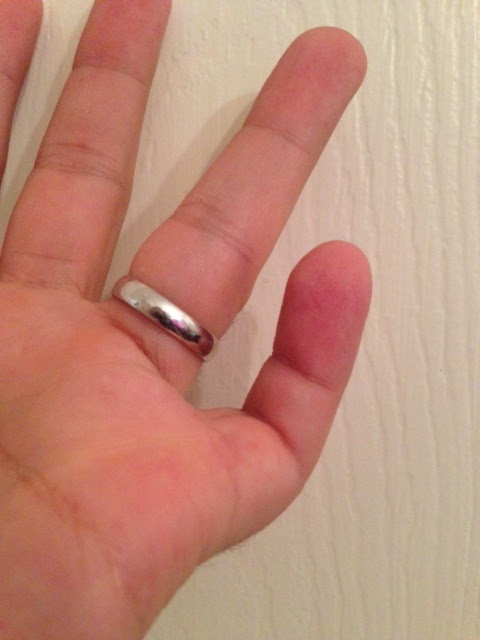 Both. Dupuytren's of my left hand was diagnosed in 2004 at Addenbrooks Hospital, Cambridge. It was causing a lot of pain as it bent up and nodule appeared on the palmar fascia. I didn't really know what it was at first. No surgery was recommended, and it has only slightly deteriorated over the last 10 years. The pain is intermittent, but bad when I catch it on something! I have very limited mobility in my little finger and can’t straighten it. The nodule is clearly visible.
My plantar fibromatosis was diagnosed in early 2009 by Mr Phillip Milsom in Colchester, Essex. He operated on my left foot (the worst of my two feet) in June 2009.
2) Do you have a family history of the disease or have any increased risk from other risk factors such as excessive alcohol consumption, smoking, diabetes etc?
My father had both hands operated on for his Dupytren's at different times; it reduced pain but increased mobility was very short lived. At a family party, I also noticed my great aunt had it in one hand. I don’t excessively consume alcohol, nor smoke. My paternal grandmother was diabetic.
3) How long had you had Ledderhose before considering Surgery? And what other treatments had you received / were you offered by medical professionals?
My GP nearly tried to lance the nodules on my foot! He believed it to be a ganglion cyst, however, thankfully he referred me to the specialist Mr Milsom. This was in early 2009 when I had chronic pain from my foot and it was starting to affect my work and sporting activities. Despite the the risks associated with surgery, he recommended this as the best plan of action. It was unusual to have Ledderhose at my age, I was 26 at the time.
4) Before Surgery were you made aware of the rate of reappearance after traditional surgery and did this concern you?
Yes, but I needed to do something. I am a teacher and I was having to take my shoes off and teach barefoot as the pain was so great. After playing hockey on a Saturday, I had to rest for most of Sunday.
I was warned that that success rate was variable and that they could easily come back, with more or less pain. It was obviously a major concern, but I was willing to try it.
5) Were you at the stage where you couldn't walk before you had surgery / what sort of pain were you in?
Obviously I was not totally incapacitated but the pain was regular and at times severe. When I woke up in the morning, it was often bad. I had a burning sensation or a dull ache. Walking on uneven surfaces was particularly difficult, the beach was the worst! I had to stop wearing several pairs of shoes as they were just impossible to wear without huge amounts of pain.
6) What kind of surgery did you have and how long did it take?
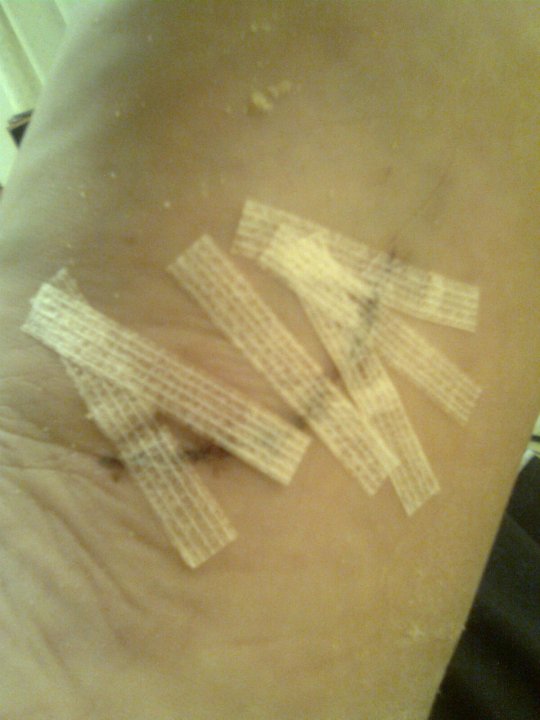 A large part of the plantar fascia was removed including the section where the nodules were. This operation was carried out by the consultant himself at Colchester General Hospital, Essex.
I was under local anaesthetic, I had several injections in my foot before being taken into surgery. My foot was elevated and a screen placed across my torso so I couldn't see down to my feet. It was a very odd sensation, it felt like someone was drawing on the base of my foot with a biro pen.
The operation lasted about an hour. After which I was allowed to go home.
7) How did the treatment go? How long did the treatment take and what was recovery time like?
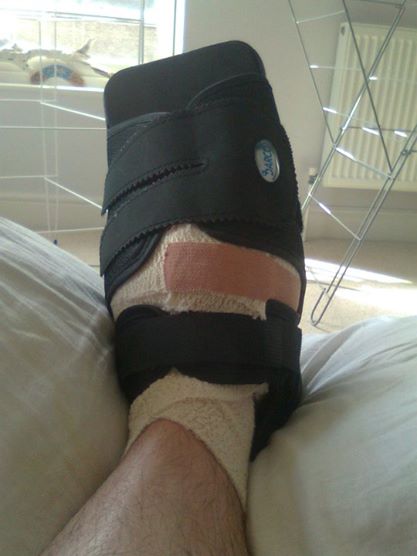 The operation was a success. However the recovery time was long. I had the operation on the 1st June and I was on the sofa for June, July and most of August. I returned to work on the 1st September.
Friends and family were good to me and took me out, however I can see how depression can kick in. I was taking a large dose of painkillers to begin with, but they left me constipated, and so I had to reduce those. I found it impossible to get comfortable and I slept a lot.
8) How long ago was the Surgery treatment? Have the lumps grown back? If yes how long did they take to grow back and are they worse now?
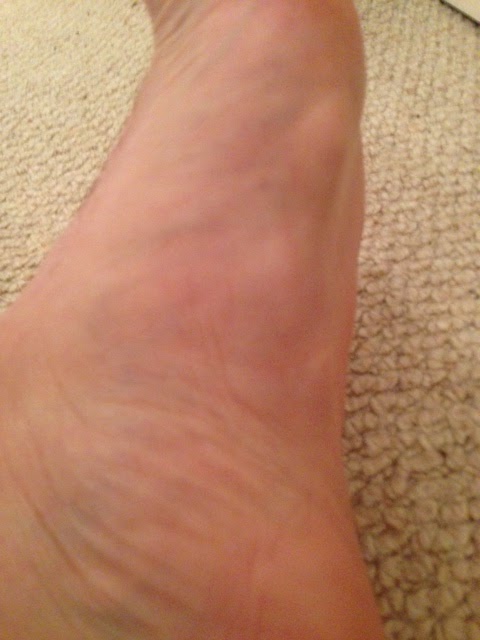
However, as I am only 30 now, I do worry that the pain will return to the level it was previously. I still get the burning pain and the dull aches, and after sport it can be very painful. I elevate it when this occurs.
9) Would you say that the surgery was worth it? And would you recommend it to people that have Ledderhose? Would you consider having it again?
For pain relief, yes it was certainly a success. However I do have reservations about it being labelled a cure. Perhaps it is for some people, but obviously mine are now bigger than they were previously!
Since discovering this blog, I am in the process of considering my next step. I am looking at alternative treatments as I do worry that this is only going to get worse. I love to play hockey, and to run; I have managed two half marathons with my Ledderhose.
10) What would you say your standard of walking is at the current time and do you think this would be different had you chosen not to have Surgery?
I would definitely say things are better, and perhaps its current state is the best it ever will be. I think I have come to the realisation that this may be something I need to cope with for the remainder of my life. There are worse discomforts in life, and it is certainly not debilitating. It is an inconvenience though, and I do very much worry that it may get worse at some point in the future.
11) What treatments have you tried since surgery?
None to date.
12) What treatment options are you considering now?
I plan to visit my GP in the area where I now live and start the process from scratch to see what is offer in my new area (Upminster, Essex) on the NHS. However I realise that I may need to seek private treatment either here or in the US. If something closer to a cure is available, the cost will be insignificant compared to the freedom it would offer.
That is the end of my interview with Andy Lewis. He has given some great answers and it is interesting to hear that at the moment his surgery is sort of successful as he isn't suffering from the same degree of pain as he was before. It will be interesting to know what treatment he is offered and what treatment option he goes for. There are certainly still some available whether it be Radiotherapy, Cryosurgery or an enzyme injection.

